1985 April City Murder and Arson Case
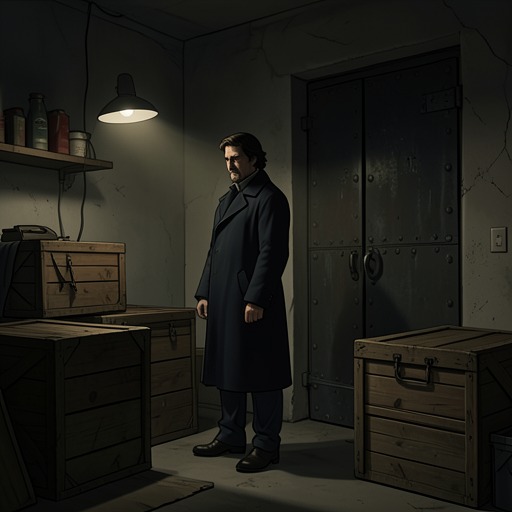
A ManThe 1985 Yokkaichi murders and arson were a robbery and triple homicide committed by Kenkichi Kobayashi in Yokkaichi, Mie Prefecture. The crime ended three lives and led to Kobayashi’s execution; decades later, its consequences continued to shape how his son, Makoto Hara, was treated and how others interpreted his life.
Causes and Background
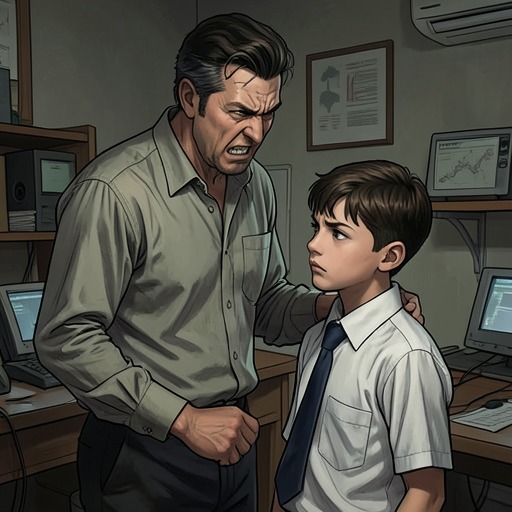
Kobayashi’s life before the crime was marked by poverty and violence. Born in Yokkaichi in 1951, he grew up with inadequate food and an abusive father. As a teenager he became delinquent, left high school, and eventually found work at a local factory. At twenty-one he married; three years later, his only child, Makoto, was born. Kobayashi abused both his wife and son, although the period’s prevailing attitudes meant that outsiders could regard the family as ordinary.
As Kobayashi approached thirty, he reconnected with a dubious acquaintance from middle school, who drew him into gambling. The habit brought mounting debts, and collectors were reportedly pursuing him by the summer of 1985. He had met the construction-company president he would later rob through the local children’s club attended by Makoto. When Kobayashi asked the president for money and was refused, the encounter became the immediate prelude to the crime.
The Murders and Arson
After the refusal, Kobayashi returned home, then went back to the acquaintance’s house in the middle of the night. He killed the construction-company president, the president’s wife, and their child with a kitchen knife, stole ¥136,000—roughly two months’ rent—and set fire to the house in an attempt to destroy evidence. He then went straight home. The account characterized the crimes as exceptionally reckless and ruthless, with the killing of a child intensifying their gravity.
Kobayashi was apprehended a week later. With three victims, a death sentence was regarded as inevitable. He did not contest the charges or appeal the lower court’s verdict. The killings consequently led to his execution, while leaving Makoto, still a child, to live with the public consequences of his father’s crimes.
Consequences for Makoto Hara
The case attracted extensive news coverage, and Makoto’s mother moved away with him soon afterward. After his parents’ divorce, he took his mother’s maiden name, Hara. He was later recorded as living in an orphanage in Maebashi, and little was known publicly about his life after leaving it.
The crime nevertheless followed him through adult life. A magazine feature about the children of offenders disclosed details of his background while nominally protecting his identity with a pseudonym; a crime-focused website had already exposed that he used his mother’s surname. The feature recounted that Makoto had boxed professionally, won the East Japan Rookie King Tournament bantamweight title in 1997, and then withdrawn from the All Japan Rookie King Championship Match before disappearing from the boxing scene. He spent nearly a decade as a day laborer, moving between jobs as rumors about his father surfaced. After repeated shoplifting convictions beginning in 2006, the feature used his record to speculate cruelly about inherited criminal tendencies, even as it acknowledged his difficult circumstances.
Memory and Significance
When Kido learned that Kobayashi had a son born in the same year as himself, the old crime acquired a new personal dimension: he imagined another fourth-grade boy coping with the aftermath of his father’s murders. The event thus entered the novel not only as a historical case but as the beginning of a long, uncertain story about what a parent’s crime does to a child—and what it does not prove about that child.
The contrast between Kobayashi’s actions and the claims made about Makoto is central to the case’s later significance. The murders were Kobayashi’s responsibility, yet public accounts repeatedly turned Makoto’s surname, hardship, and later offenses into evidence for a supposed inherited criminal nature. Kido’s recollection of the case instead emphasizes the child who had to bear its social aftermath, resisting any simple equation between a parent’s violence and a son’s fate.